
In an age of endless tutorials and ever-expanding art supply lists, it’s easy to forget that strong drawing skills don’t begin with abundance; they begin with understanding. That’s exactly what makes Pencil Sketching by George W. Koch so enduring.
Sketching is something I have always been really bad at incorporating into my routine, which has greatly hindered my progress as an artist. I believe it is because every art class I took focused on highly polished, finished drawings. Sketching was never emphasized, and therefore, it has been easy for me to brush it off. However, since discovering George Koch’s book, he so brilliantly explains this subject, my thoughts have changed, and now I am looking forward to making it a daily practice.
Why You Need to Read Pencil Sketching by George W. Koch
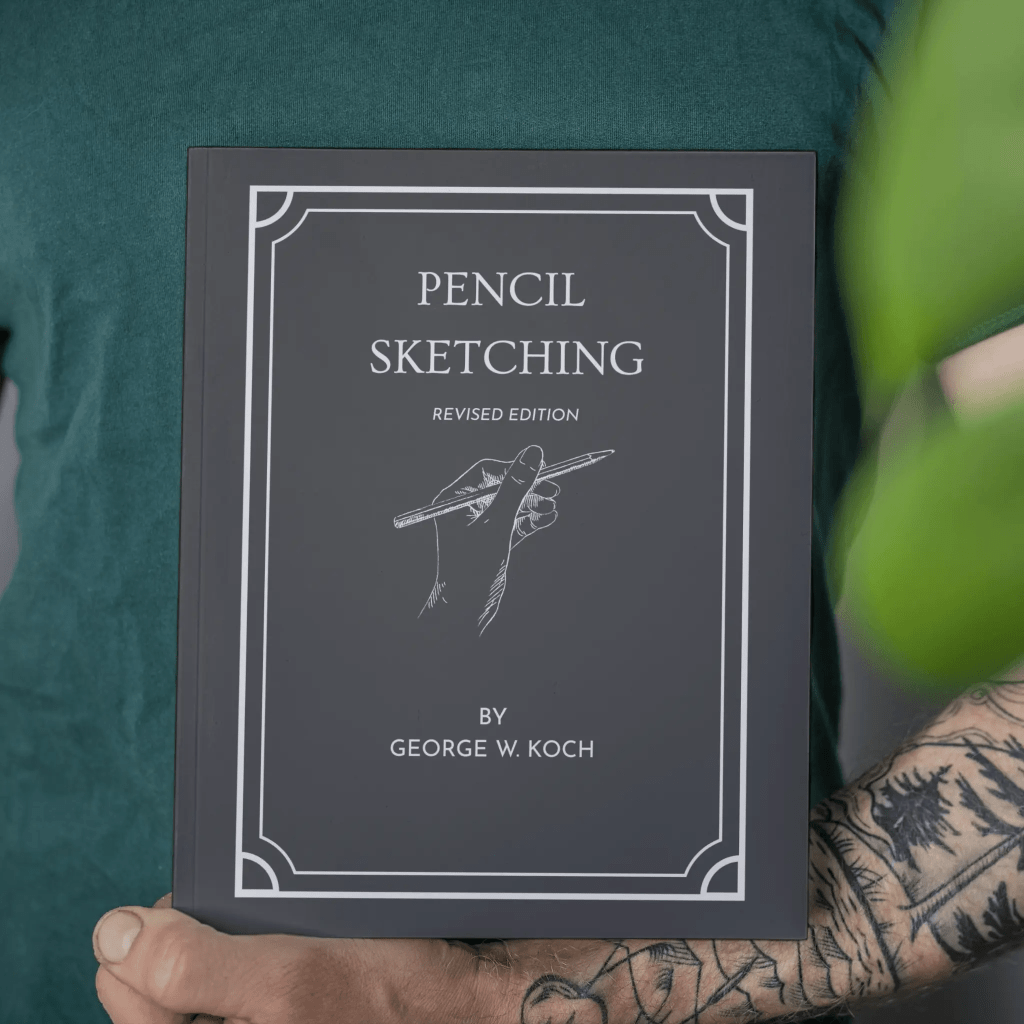
Originally published in 1913 by The Prang Company, this modest but powerful book remains one of the clearest, most practical introductions to pencil sketching ever written. More than a century later, its advice feels not dated, but refreshingly direct.
Clear Thinking About Materials
One of the first things that sets Koch apart from many modern instructors is how plainly he explains materials. Rather than overwhelming students with options, he focuses on why certain pencils, papers, and surfaces are appropriate, and when they are not.
Koch emphasizes that materials should serve the sketch, not distract from it. He explains hardness, softness, line quality, and surface tooth in language that is easy to grasp, even for beginners. This clarity helps students make informed choices early on, avoiding the frustration that often comes from using unsuitable tools.
In a time when artists are frequently encouraged to buy more before they understand more, Koch’s restraint feels especially valuable.
Technique as a Means, Not an End
Koch’s discussions of technique are practical, grounded, and free of gimmicks. He addresses line, value, pressure, and control with the calm assurance of someone who has spent years teaching students how to see rather than simply copy.
What makes his approach stand out is that the technique is never treated as an end in itself. Instead, it is presented as a tool, useful, necessary, but ultimately subordinate to observation and intent. Koch encourages careful study of form, proportion, and light, but always in service of expressing what the artist perceives.
Learning How to Look
Perhaps the most compelling aspect of Pencil Sketching is Koch’s guidance on how to view your subject. He reminds readers that drawing is not merely a mechanical act, but a process of interpretation.
Koch urges students to slow down, to truly observe relationships, edges, and masses before committing marks to paper. His advice helps readers move beyond outlines and symbols toward sketches that feel thoughtful and alive.
These sections feel remarkably modern, echoing ideas often associated with contemporary observational drawing methods, yet they were written decades earlier with quiet confidence.
Expression Comes First
Above all, Koch insists that individual artistic expression is senior to technique. This idea runs like a steady current throughout the book. While he provides structure and discipline, he never promotes sameness or formulaic results.
Koch acknowledges that no two artists will see or draw the same subject in the same way, and that this is not a flaw, but the very heart of art. Technique, in his view, should support the artist’s vision, not replace it.
For students who fear “doing it wrong,” and for teachers who want to encourage confidence alongside skill, this message is as important now as it was in 1913.
Sketching vs Drawing
Another enduring strength of Pencil Sketching is Koch’s clear distinction between sketching and drawing, two practices that are often treated as interchangeable, but which serve different purposes.
Koch describes sketching as a rapid, exploratory process. It is concerned less with finish and more with understanding: capturing proportion, movement, light, and structure before details take over. Sketching, in his view, is where observation is sharpened and habits are formed.
Drawing, by contrast, is more deliberate and resolved. It builds upon the skills developed through sketching and asks for greater control, refinement, and intention. Koch is careful to note that strong drawings are rarely the result of careful technique alone; they are the outcome of repeated, thoughtful sketching.
What makes this distinction especially valuable is Koch’s insistence on routine sketching practice. He encourages artists to sketch regularly and without pressure, emphasizing that this habit trains the eye long before it perfects the hand. Through frequent sketching, students learn to see relationships more clearly, recognize essential forms more quickly, and approach finished drawings with greater confidence.
For Koch, sketching is not a lesser form of drawing; it is the foundation of it. This perspective feels strikingly modern and offers a gentle but powerful reminder: improvement comes not from striving for polish, but from consistent looking and honest practice.
Why Republish Pencil Sketching Today?
I chose to republish Pencil Sketching because it offers something many modern resources overlook: calm, thoughtful instruction rooted in years of teaching experience from an artist enthusiastic about sharing his knowledge with others. The language has been carefully preserved while improving readability, making the book approachable for today’s artists without losing its original character.
Whether you are a beginner learning to sketch for the first time, an educator seeking clear explanations, or an experienced artist returning to fundamentals, Koch’s book provides guidance that is both practical and humane.
It reminds us that good sketching begins not with complexity, but with attention, and that technique matters most when it serves expression.